Cocoa, vanilla and coffee from Bundibugyo
Three crops grown by our members and handled with care at every step.
Theobroma cacao
Cocoa
In Uganda, cocoa is almost entirely a smallholder crop. Bundibugyo, on the western slopes of the Rwenzori mountains, is the country's main growing area and the home of our cooperative. More farmers are now growing cocoa in central and eastern districts too. The trees grow best under shade, and are often planted alongside bananas, coffee and timber trees.
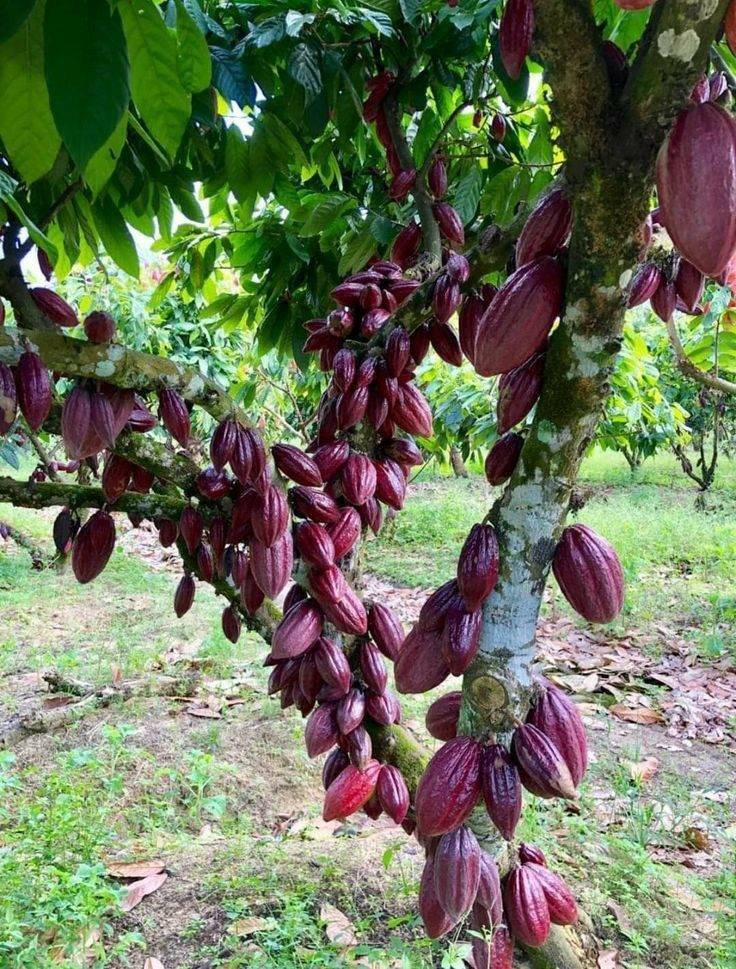
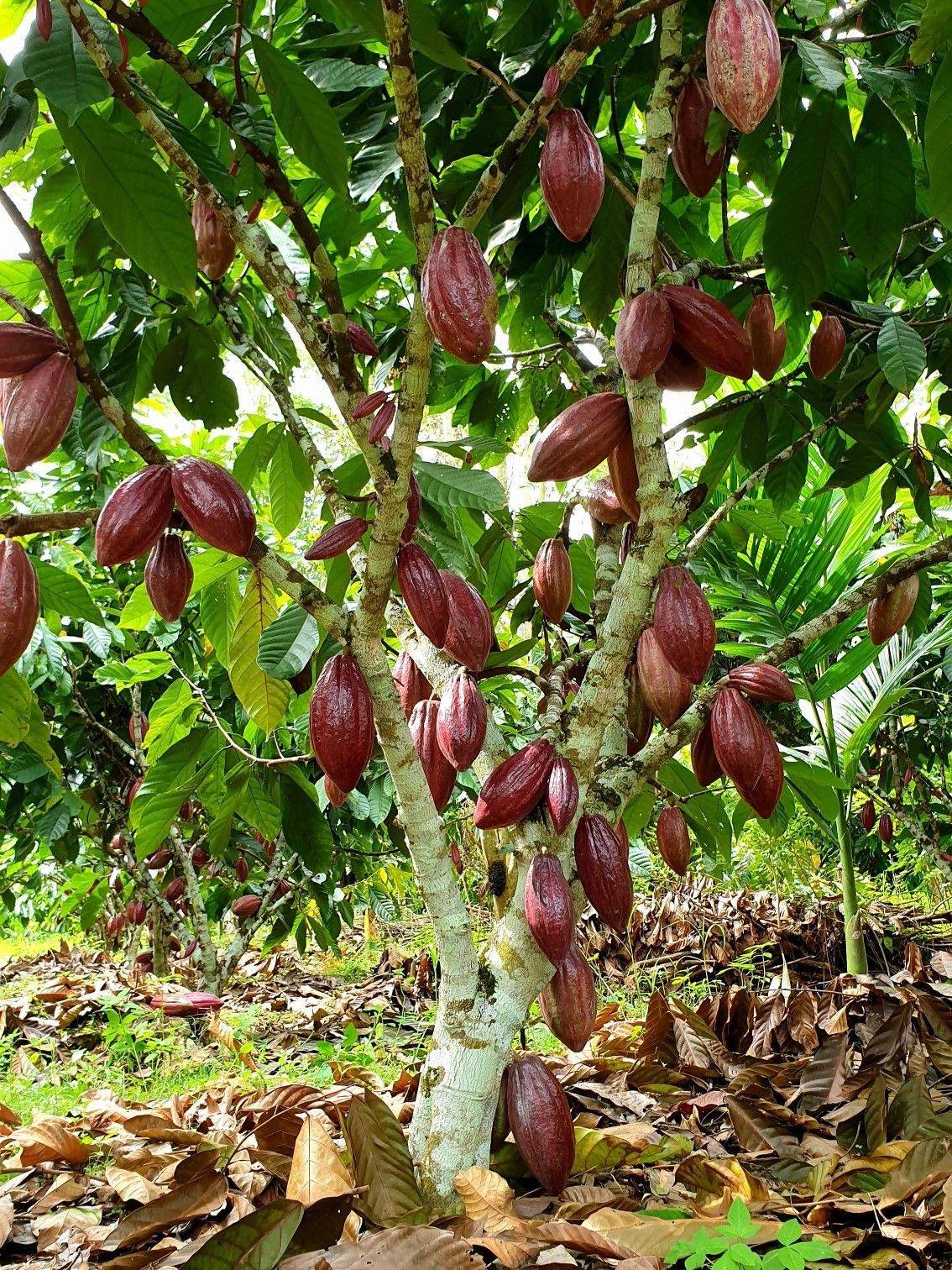
Cocoa pods grow straight from the trunk and main branches. Inside each pod are beans wrapped in a sweet white pulp, and that pulp is what makes the next stage, fermentation, possible.
Where cocoa's flavour is made
Harvesting ripe pods
Pods are cut, not pulled, from the tree when their colour shows they are ripe, which protects the flower cushions that carry the next crop.
Opening
Pods are opened within a few days of harvest and the wet beans are scooped out, leaving behind the husk and the central placenta.
Fermentation
Beans ferment in wooden boxes or covered heaps, usually for five to seven days, and are turned so they ferment evenly. This is where the precursors of chocolate flavour develop.
Slow drying
Fermented beans are dried in the sun or under cover, slowly and evenly, until they are dry enough to store without mould. They are then bagged and kept off the floor.
Vanilla planifolia
Vanilla
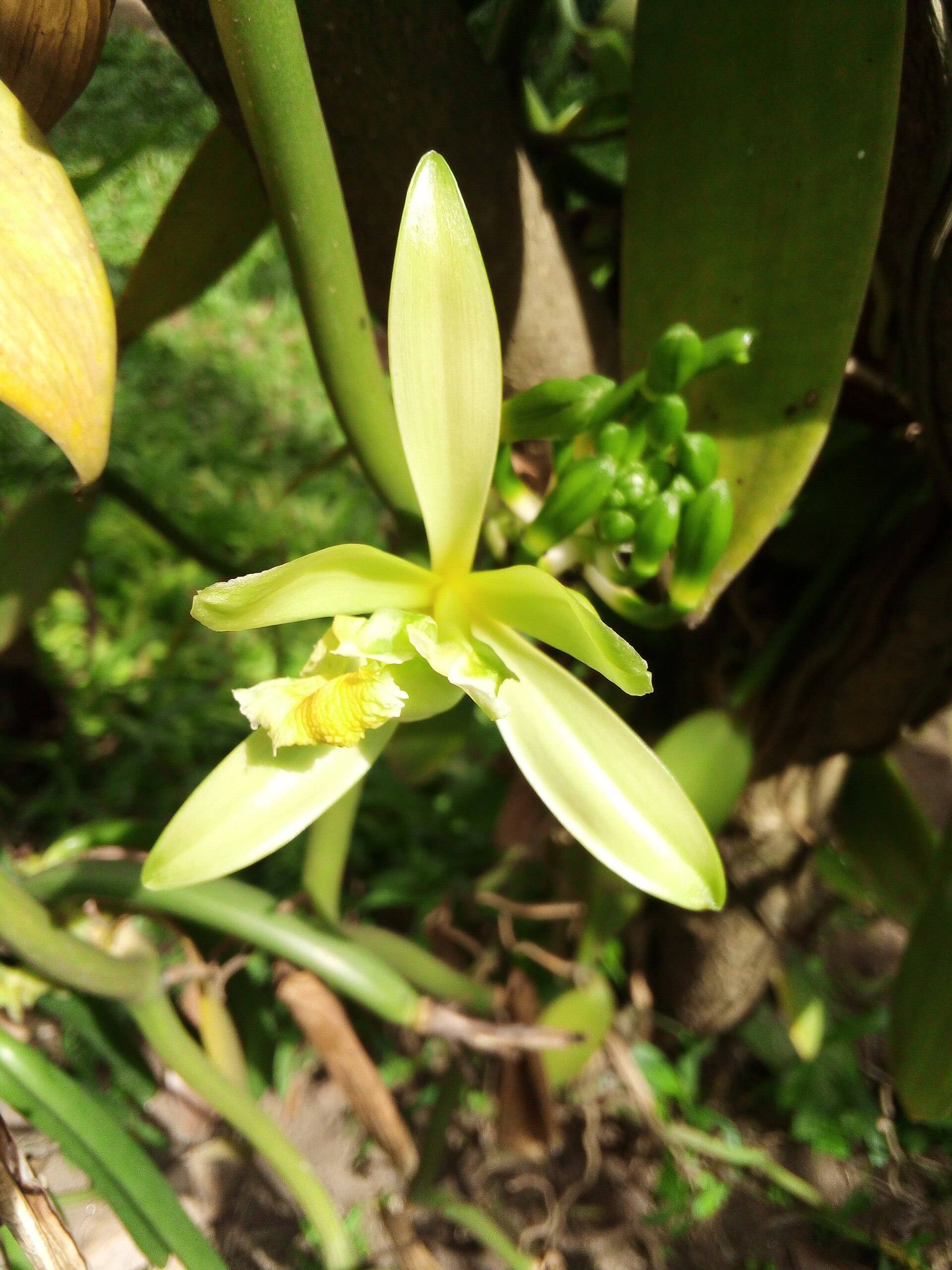
Vanilla is the pod of a climbing orchid. Outside its native Mexico it has no natural pollinator, so in Uganda every flower is pollinated by hand. Each flower opens for only a few hours on a single morning, which means farmers walk their vines every day of the flowering season.
In Uganda, vanilla is grown in central districts such as Mukono and Kayunga and in the west around Bundibugyo and Kasese, usually by smallholders, on vines trained up living support trees.
A crop of patience
Training the vines
Vines climb shade trees and are looped back down at about shoulder height, which keeps flowers within reach for pollination and encourages flowering.
Hand pollination
Using a small stick, the farmer lifts the flap that separates the flower's male and female parts and presses them together. It takes seconds per flower, and thousands of flowers per season.
Harvesting at maturity
Pods take around nine months to mature. They are picked one by one as the tips begin to turn yellow. Picking early is the most common cause of poor vanilla.
Curing
Green pods have no vanilla aroma. It develops over months of curing: blanching, sweating, slow drying and conditioning, until the beans are dark, supple and fragrant.
Coffea canephora & C. arabica
Coffee
Uganda is one of the few countries where coffee is native. Robusta grows wild in the forests around Lake Victoria, and it makes up most of what Ugandan farmers produce. Arabica is grown higher up, on the slopes of Mount Elgon in the east and the Rwenzori mountains in the west.
Most Ugandan coffee comes from smallholder families farming small plots, often with coffee planted among bananas, beans and shade trees. Our members farm the same way. Coffee is a long-term crop for them, tended over years rather than seasons.
From cherry to green coffee
Selective picking
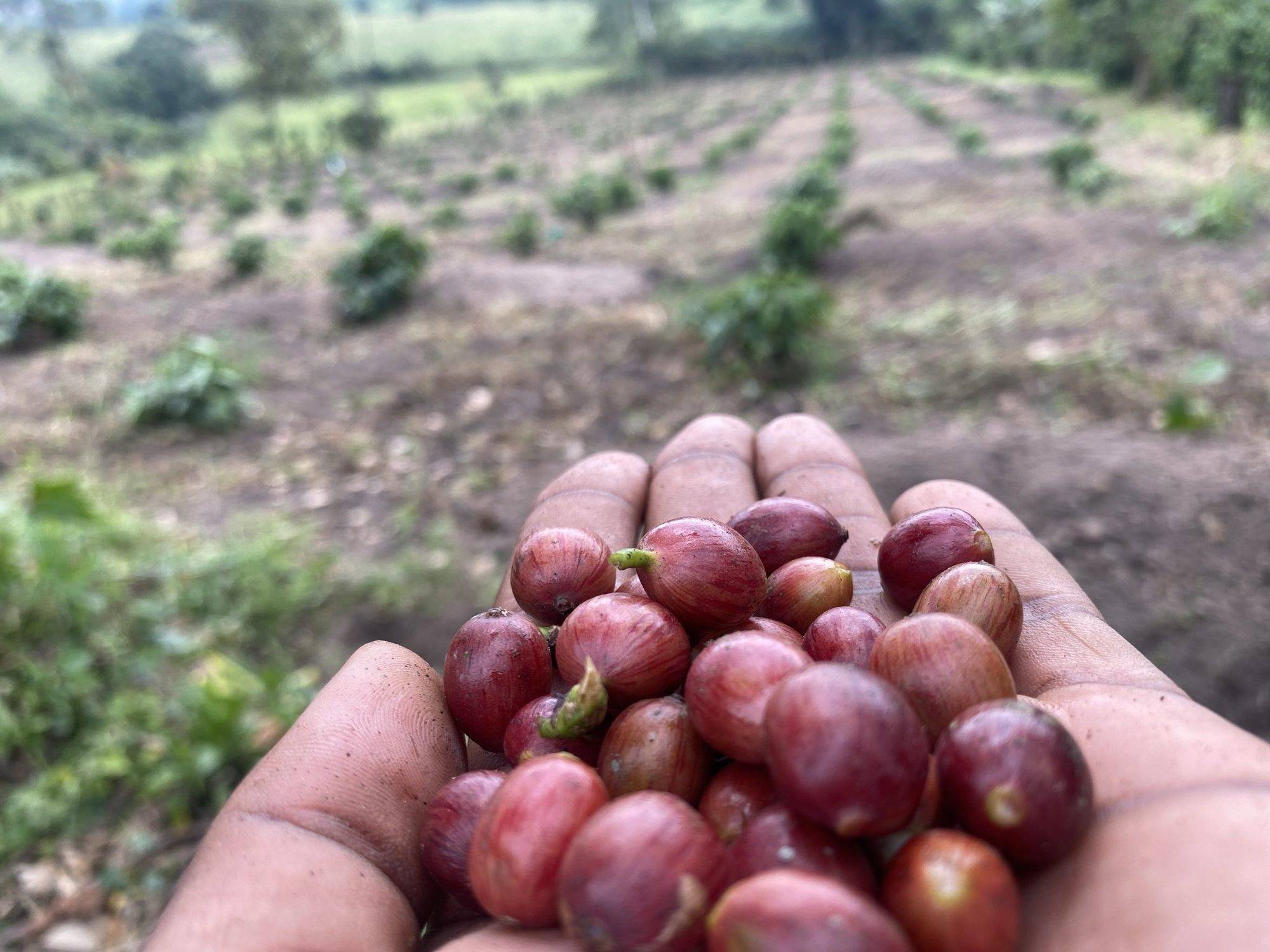
Cherries on one branch ripen at different times. Picking only the ripe red cherries, and going back for the rest, is the first and simplest step to a better cup.
Drying off the ground
Cherries and parchment dry on raised beds or clean tarpaulins, turned regularly so they dry evenly and stay free of soil, mould and smoke.
Sorting
Damaged, under-ripe and foreign material is removed by hand before coffee is bagged, so problems are caught on the farm rather than at the buyer's warehouse.
Clean storage
Dry coffee is kept in clean bags, on pallets and away from walls, fuel and anything with a strong smell, because coffee readily absorbs odours.
Interested in our produce?
Tell us which crop you are interested in, and the quantities and timing you have in mind.